- Posted on
- • Computers
Ottawa area small computer stores in the Y2k+ era
- Author
-
-

- User
- seankerr
- Posts by this author
- Posts by this author
-

1999 to 2009 was 'my' decade of service in the retail computer trade. Geographically, I was in the National-Capital Ottawa area. Silicon Valley North as it was also known. Still producing in recent years up to 2020, tech professionals at a higher growth rate than Silicon Valley itself.
Ottawa has a rich tech history, from the early days of NRC, and Bell Northern Research (BNR) to Mitel founded in 1972. Its "golden age" of tech was 1995-2001. The period saw rapid growth in the telecommunications sector, fueled by the internet boom and the expansion of companies like Nortel.
Companies like Nortel, Mitel, JDS Uniphase, Cognos, and Corel were prominent during the era. Medical research and imaging systems sector were also big at the time.
This provided a lot of opportunities to sell to those various companies, but particularly to sell parts and custom computers to the high tech minded people, who worked at those various companies.
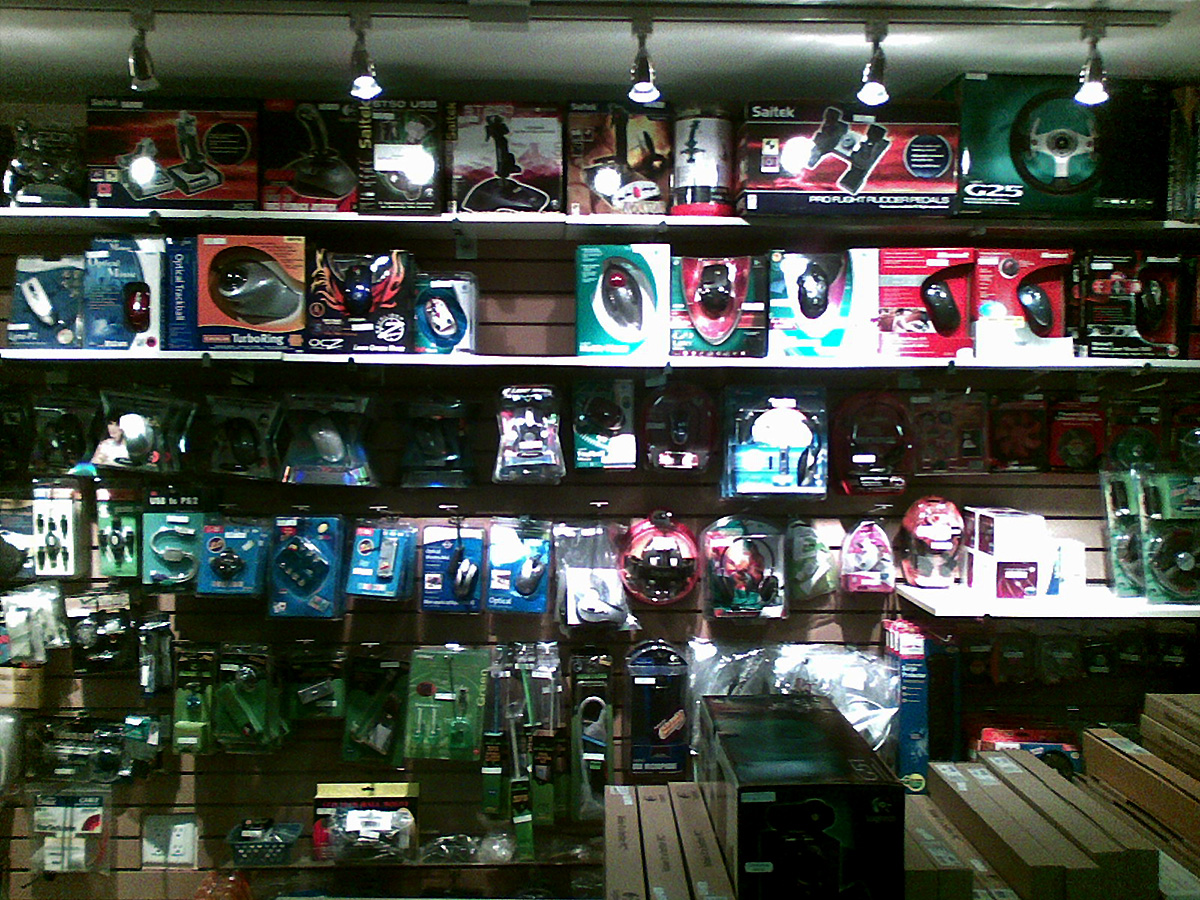
Ottawa had a long list of small- privately owned computer stores, selling components and custom made machines. Lets do a bit of a roll call: PC Cyber, RB Computing, Network Supply, Everbest Computers, OEM Express, Crawford Microsystems, Mooney's Bay Computer, Brookecliff Technology (TTE), CompuStar, Fedacom, Laurier Computers, Northern Micro, Sprint Computers, Compunation, Computrend, Si-COM Computer Technologies, SONA Computer, Summit Direct Computers, Tolga Computers (TCS - Tolga Computer Systems).
Most of these were the mom and pop shops of computer stores, not like larger chains in the USA such as Microcenter. Some might have had 2 or more stores, but they still maintained that small shop feel, or at least started out that way.
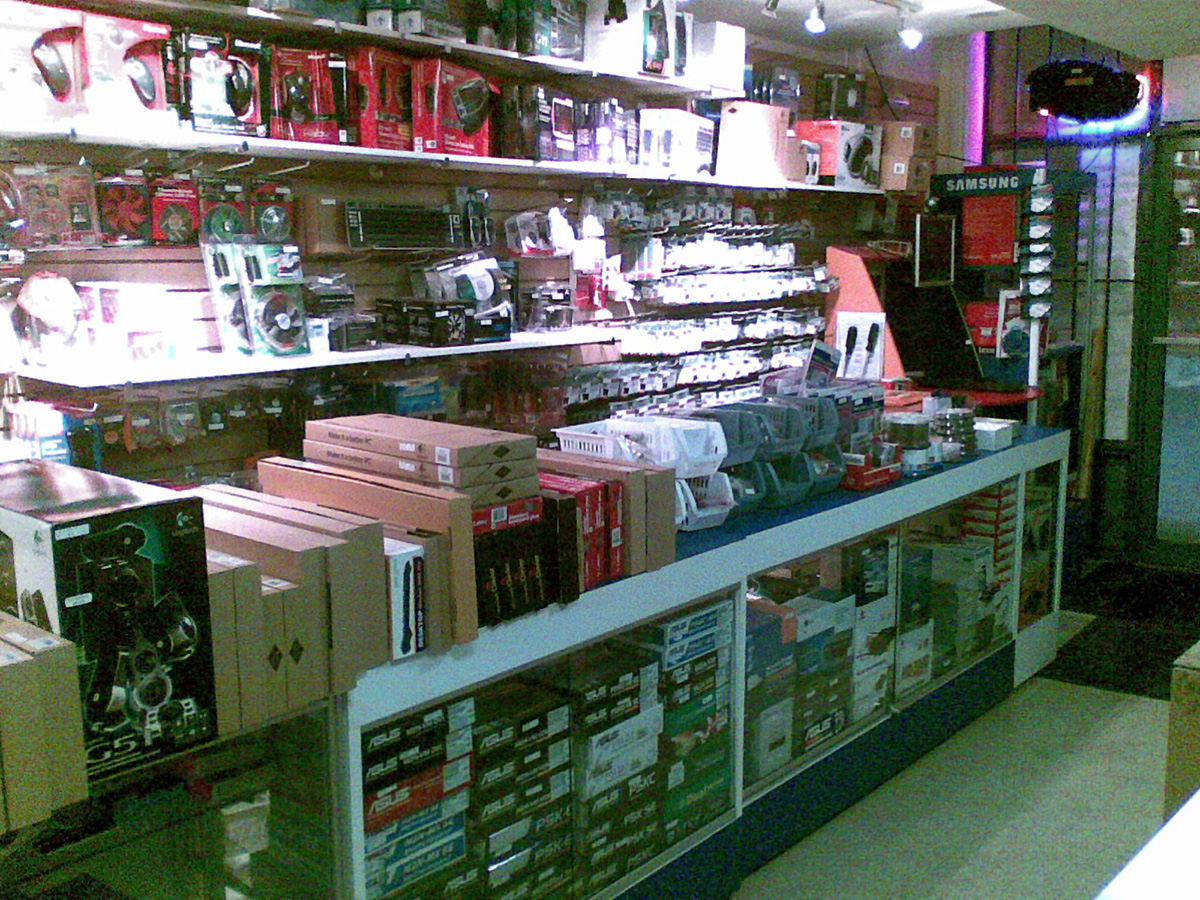
I shopped at the store that I came to work at, and was a patron to other shops in the area in the years before 'Y2K'. I specifically remember 3D graphics accelerators (as opposed to older 2D accelerators) coming into play and that being one of the first components I went shopping for to buy brand new. I also remember shopping for sound cards (SoundBlaster series in particular), dial up modems (my first that I bought was a Cardinal 14.4Kbps), CD-ROM drives (an Acer 6X was the first one I bought) and hard drives (my first new HDD purchase was a Quantum 8.4G). Motherboards and CPU's I tended to buy used from friends, or by acquiring cast-offs from my parents places of work.
But I digress- back to the stores. Or not... I ought to also call out suppliers/distributors - Synnex, Tech Data, Comtronic, Elko, Ingram Micro. These were the middle-men, suppliers of computer hardware and software to the small computer stores who couldn't buy in quantity big enough to directly order from the big names like AMD or NVIDIA etc. They sold to the small stores, but didn't provide much in the way of warranty support. For this, the small stores still had to refer to the vendor themselves.
I can remember a common complaint of the time was that small stores charged a restocking fee on opened returned items. Or charged a fee to warranty an item after a certain amount of days. This I'd say was generally because the small shops used distributors who generally provided little to no warranty themselves. Distributors might have 30-60 day warranty, but the item could sit on the shelf for that time at the store that bought it.
So it wasn't easy or cheap to warranty some items. As for defective CRT monitors, I had to deliver them myself to a local certified repair location, and so chose brands that had this option instead of having to pay one way shipping somewhere to have a repair effected. Other items like graphics cards etc required us (the store) to call the manufacturer directly and set up an RMA (return merchandise authorization). This took time and money to ship one way.
Many people thought we had big margins, sure there were some items like that, but the majority of the margins were below 5%. I can say this for fact as I'd be the one picking up the parts from the distributors.
On a Reddit I recently came across that was from some 13 years ago, someone was complaining that the small stores didn't post or put prices on items in-store. Where I worked we did put prices on items, but the prices fluctuated so much, as competition was fierce- so I spent a lot of time updating price tags and signage.
We advertised in newspaper-print-type monthly 'magazines' as did many of the other small computer stores. I'd say in the mid 1990s you could actually advertise your prices, but as the internet came in to play, component pricing could change within the month which you placed the ad. So we wouldn't list prices, unless it was a product that held its price - or we just listed 'prices subject to change' as a disclaimer.
Here is some minutia right here - I also remember Apple releasing their '5 flavors' of iMacs in around 1998-1999. Blueberry, Grape, Tangerine, Lime and Strawberry. This was a huge move from beige which was everywhere in computers. Macs were beyond me and my budget at the time, not widely supported through local stores either. But what a great thing they did with those colours. It took a while but PCs did join in starting with mainly black coloured components like CD-ROMs and floppy drives, and black keyboards and mice. Otherwise, case manufacturers found ways to hide the CD drives behind case face plates to attain a uniform colour scheme.
I do miss being more a part of the hardware scene, knowing about all the latest computer tech, seeing the various trends come and go! In general I can say you don't see many of these types of small shops any longer at all, but they were certainly quite prevalent in the part of Canada I grew up in.
I can't speak for the US fully, but it seemed as if they had larger chains (even if the mom/pop shops were there too) like Circuit City, Babbage's, Egghead Software, CompUSA, and Computer City. We really didn't have those big shops like the US did, so I believe we had a more personalized experience overall, until of course chains came to Canada as well in the 2010's.